

As a professional AV integrator, the task is to design complex solutions that help schools modernize their learning environments. An expert knows how to select the right displays, networks, and smart classroom technology. However, one of the most impactful technologies that is often left off a quote is classroom audio.
This isn’t just about turning up the volume—it’s about creating clarity. Classroom audio systems improve intelligibility, ensuring every student hears instruction clearly, no matter where they sit. For schools, it is one of the simplest and most affordable ways to raise learning outcomes. For integrators, it is an easy-to-install, high-margin upgrade that can be seamlessly added while already enhancing classrooms with displays, networks, or PA systems.
To move from a simple vendor to a trusted education partner, integrators must lead the conversation with classroom audio. Here is why it belongs in every K-12 project.
The Market is Growing Fast
The conversation around EdTech often centers on screens, software, and student devices. But what good are those tools if students can’t hear the teacher clearly?
That’s why the classroom audio market is surging. It’s projected to reach $2.5 billion by 2032 with an annual growth rate of over 8%, according to recent market analysis. Yet, most classrooms today still lack dedicated audio. This is the critical gap where systems integrators can add immediate value and build a reputation for a truly holistic approach.
Why This Matters to Integrators
- Boost Project Value & Margins: Classroom audio integrates easily with new construction or upgrades. While you’re on-site pulling cable for displays or paging, you can add audio without a major redesign. This minimal time investment delivers a significant return – with a greater profitability project.
- Differentiate Your Firm: Schools already expect AV vendors to provide video. By leading with audio, you position yourself as a consultant who understands the entire learning environment—from visual to acoustic.
- Future-Proof Relationships: Today’s districts prioritize equity, accessibility, student achievement, and teacher wellness. By including classroom audio, you help schools address all of these priorities—positioning your firm not just as a vendor, but as a consultant who understands the entire learning environment, from visual to acoustic.
What Classroom Audio Really Does: Intelligibility, Not Just Loudness
A teacher’s normal speaking voice averages 50–60 dB, but its volume naturally drops over distance, decreasing by almost 30% by the time it reaches the back of the room. This drop means a teacher’s voice can fall below 50 dB within just 12 feet—a level easily drowned out by the average classroom’s background noise, which also hovers around 50 dB from sources like HVAC systems, hallway chatter, and student activity. Even when a teacher raises their voice to 65 dB to overcome ambient classroom noise, students in the back of the room can still struggle with speech intelligibility, while the teacher experiences significant vocal strain.
To fully comprehend speech, students need a +15 dB Signal-to-Noise Ratio (SNR). Yet, in many classrooms, the SNR for students at the back of the room is a mere +3–5 dB, forcing them to strain just to hear.
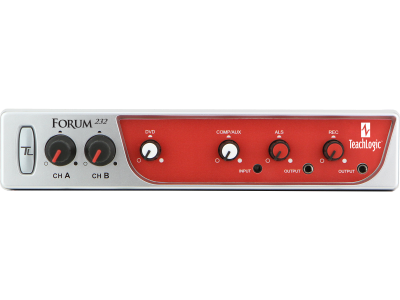
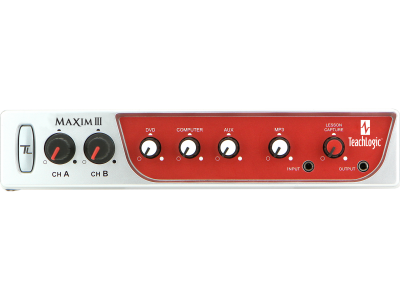
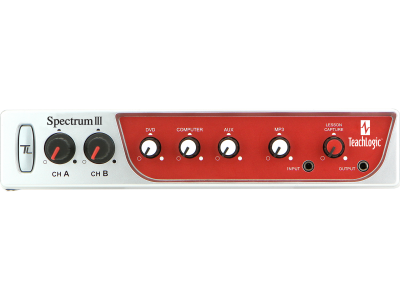
A sound field system, such as those from TeachLogic, solves this problem. It evenly distributes the teacher’s natural voice throughout the room, delivering intelligible audio to every student, no matter where they sit. This allows students to focus on learning, not on straining to hear.
Better intelligibility leads to:
- Fewer missed instructions and repeated explanations.
- Increased time on task and stronger student focus.
- Improved engagement for English Language Learners (ELLs) and students with hearing challenges.
System Components and Wireless Technology
A modern classroom soundfield system is a simple, purpose-built ecosystem designed for reliability and ease of use. Understanding its core components and the wireless technology that powers it is key to a successful deployment.
- Wireless Microphone: A small, lightweight, and easy-to-wear microphone (often a pendant or lapel style) captures the teacher’s voice without vocal strain.
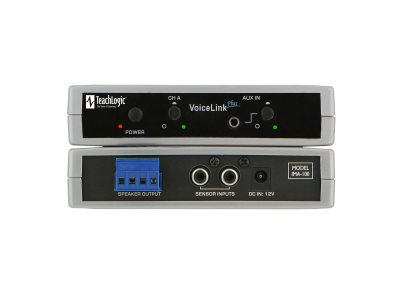
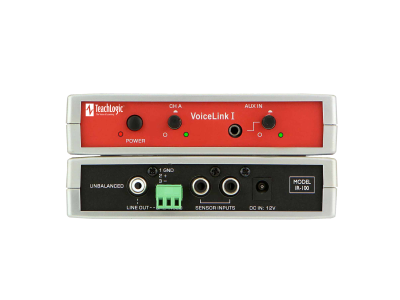
- Audio Receiver/Amplifier: This is the “brain” of the system. It receives the signal from the microphone, amplifies it, and distributes it to the speakers. It also serves as the hub for integrating with other classroom technology like video conferencing or a PA system.
- Classroom Speakers: Strategically placed speakers, often mounted on the ceiling or walls, ensure the teacher’s voice is evenly distributed throughout the room, eliminating “hot spots” and “dead zones.”
- Optional Student Mic: Some systems include a handheld or pass-around microphone for students, encouraging them to participate and be heard by the entire class.
The choice of wireless technology for these systems is critical for performance.
- DECT RF Solutions: DECT systems provide teachers with the freedom to move and interact with students without worrying about line-of-sight issues. Because the wireless signal can pass through walls and furniture, DECT works well in larger classrooms or when a school wants consistent coverage across multiple rooms. It is especially effective in tech-heavy buildings, as its dedicated frequency band (1.9 GHz) avoids interference from Wi-Fi and Bluetooth.
- Infrared (IR) Solutions: IR classroom audio keeps sound securely contained within the four walls of the classroom, preventing signals from spilling into adjacent spaces. This makes IR a strong choice for testing rooms, special education, or any space where privacy is important. IR signals do not compete with other wireless devices, which helps schools avoid interference.
How Easy Is Classroom Audio to Install?
Many administrators assume adding audio requires major construction. The truth is, classroom audio installs are simple and non-disruptive—especially when bundled with other AV upgrades.
- Straightforward Wiring: With a modern system, a single CAT cable can often deliver both power and audio to the transmitter, simplifying installation and reducing cable clutter.
- Scalable Design: Systems can be wall-mounted, ceiling-mounted, or integrated with existing classroom infrastructure, providing flexibility for any project.
- Quick Integration: Because soundfield systems are designed to sit alongside PA, life safety, and conferencing solutions, they do not slow down other installations.
For integrators, this means they can layer in audio while already on-site pulling wire for projectors, touchscreens, or paging systems. It is a minimal time investment with a high return for both the business and the school.
Benefits at Every Level
The value of classroom audio resonates across the entire school community:
- For Students: Every child, no matter where they sit, hears clearly. That consistency levels the playing field for ELLs, students with hearing loss, and those at the back of the room.
- For Teachers: Using a lightweight pendant mic reduces vocal strain, preventing fatigue and lost workdays. Teachers also report stronger classroom management when students hear directions the first time.
- For Schools: Classroom audio systems improve learning outcomes, support ADA compliance, and tie directly into life safety systems for a smarter, safer classroom environment. For administrators, it is one of the most cost-effective ways to improve both achievement and wellness.
The TeachLogic Difference – The Smart Choice for Integrators
The true power of a classroom audio system lies in its ability to become a central hub for multiple technologies. TeachLogic’s purpose-built systems are designed for K-12 realities, offering essential features at an exceptional value, which makes them a smart choice for both schools and integrators.
- Essential Features at an Exceptional Value: TeachLogic delivers the core classroom audio features schools actually need, such as multi-channel audio, easy-to-use mics, and seamless integration. This focus on essential performance avoids the cost of infrequently used extras, enabling administrators to make smarter spending decisions.
- Life Safety & Paging: TeachLogic systems are designed to integrate with a school’s existing infrastructure. They feature inputs that allow emergency alerts to instantly override classroom audio, ensuring critical information is heard by all.
- Hybrid Learning Ready: The systems allow a teacher’s voice to be sent directly into video conferencing platforms, improving the clarity of instruction for both in-room and remote learners.
- ADA Compliance: TeachLogic’s integration capabilities help schools meet federal accessibility standards. Assistive listening outputs connect seamlessly to student devices like hearing aids and cochlear implants, ensuring effective communication for all students.
Part of the Williams AV Family: As a member of the Williams AV family, a global leader in ADA compliance and interpretation systems, TeachLogic offers a scalable solution. This partnership allows an integrator to provide schools with an integrated ecosystem of audio solutions that seamlessly extend beyond the classroom for assistive listening, language interpretation, and more.
By integrating audio with these crucial school systems, an integrator demonstrates that a soundfield system is not a “nice-to-have” but a must-have hub of the modern classroom.
Learn More